
Last updated November 17, 2026
 Home additions & ADU
 Kitchen remodeling
 Bathroom remodeling
 Roofing
 Windows & doors
 Driveway & pavers
 Fence
Free written scope consultation - allowances, timeline, and change-order rules on paper before a single trade is scheduled
Construction Warning Signs: A Henderson Homeowner’s Reference Guide
Most construction problems in a Henderson home don’t announce themselves with a dramatic crack or a sudden leak. They show up quietly, in patterns. A crack that stair-steps across a block wall at the corner tells you something different than a horizontal crack in the same spot, even though they look similar to an untrained eye. One is foundation movement. The other is structural load. The urgency levels and repair costs are not the same. This guide teaches you to read your home’s exterior as a diagnostic system: cracks, roof tile movement, driveway panel behavior, fence post lean, and interior water stains, organized by what each sign means and which trade you should call. We’ve spent years watching how Henderson homes fail, and the patterns repeat.
Quick Answer
Construction warning signs in a Henderson home fall into six categories: crack patterns in stucco and masonry, roof tile and membrane symptoms, driveway and flatwork failures, fence and gate structural movement, water intrusion traces inside the home, and efflorescence or staining that points to moisture behind a wall. The pattern matters more than the size. A hairline crack in one shape can mean more than a wide gap in another. Document what you see, note whether it’s growing, and match the sign to a trade before you spend money. If a sign traces to structural movement, water intrusion, or roof failure, call a professional rather than repair cosmetically.
Styles & brands we work with
- Kitchen remodeling
- Bathroom remodeling
- Home additions & ADU
- Roofing
- Windows & doors
- Driveway & pavers
- Fence
Table of Contents
- Crack Patterns: Stair-Step, Horizontal, and Vertical
- Roof Warning Signs in Henderson’s Tile and Flat Roof Homes
- Driveway and Flatwork Signals
- Fence and Gate Warning Signs
- Water Intrusion Indicators Inside the Home
- Efflorescence and Staining as Moisture Diagnostics
- Matching the Sign to the Trade and the Urgency
- How to Document a Warning Sign Before You Call
Crack Patterns: Stair-Step, Horizontal, and Vertical
The shape of a crack tells you more than its width. In Henderson’s stucco and block construction, crack orientation is a diagnostic clue, and homeowners who learn to read it save themselves a lot of guesswork. A crack running diagonally across block mortar joints in a staircase pattern is a movement indicator. A horizontal crack near the top of a wall or at a beam bearing point is a load indicator. A vertical crack at a control joint or at the corner of an opening is often a shrinkage or thermal crack. These are not cosmetic categories. Each one points toward a different trade and a different urgency level.
Stair-step cracking in block or brick typically signals foundation movement. It follows the mortar joints because that’s the weakest path through the wall. In Henderson, one common driver is caliche: the hard, calcium-carbonate-rich soil layer that underlies much of the valley. Caliche doesn’t drain uniformly and doesn’t settle uniformly, so a footing that bears on mixed soil can move. Thermal cycling is the other driver. Henderson’s high-desert temperature swing, warm days and cool nights, expands and contracts exterior walls repeatedly. A wall that moves seasonally will often show stair-step cracking at the corners where two planes meet.
Horizontal cracking carries a different meaning. When a crack runs parallel to the ground near the top of a block wall, at a beam pocket, or under a heavy window header, it suggests the wall is being pushed or loaded in a way the reinforcement is resisting. This is a structural engineering question, not a masonry patch question. A horizontal crack should be evaluated by a licensed structural professional before any cosmetic repair.
Vertical cracking is the most forgiving of the three when it appears at a control joint, at a corner of a door or window opening, or along a cold joint in a poured wall. These cracks typically reflect normal drying shrinkage or thermal movement. The key questions: is it new, is it widening, and does it come with any displacement on either side?
- Stair-step pattern: foundation or footing movement indicator, evaluate for soil and drainage.
- Horizontal pattern: load or structural indicator, evaluate promptly.
- Vertical pattern at a joint: often shrinkage, monitor for width change.
- Any crack with displacement: one side of the crack is no longer flush with the other, treat as active movement.
- Any crack that grows: mark it, measure it, and re-measure in a few months.
One practical test: place a small pencil mark at each end of the crack and note the date. Come back in a season and see whether the ends have moved. A crack that has stabilized can often be sealed. A crack that’s still moving should not be patched over until the cause is addressed.
The exterior signs above often connect to interior concerns. When the interior work eventually needs interior fixtures, familiar brands like Toto and Grohe are part of the picture. But the priority is diagnosing the movement first.
Roof Warning Signs in Henderson’s Tile and Flat Roof Homes
Henderson’s roofs are dominated by two systems: concrete and clay tile on pitched roofs, and TPO or modified bitumen membrane on flat and low-slope sections. Each fails in specific, predictable ways, and the signs are readable from the ground for most of them.
Tile roof signs. Ridge tiles sit at the peak of the roof and are held with mortar. In Henderson’s thermal cycling, the mortar cap that binds ridge tiles cracks and loosens over time. Look for:
- Ridge tiles that are visibly out of line with their neighbors, or lifted at an edge.
- Mortar caps with open cracks or pieces missing.
- Field tiles that have slid down-slope, creating uneven courses.
- Broken tile corners and cracks, usually around valleys, hips, and penetrations.
- Granule loss in the underlayment visible at broken tile locations, which means the felt is exposed and aging.
Ridge tile movement is the most important of these. A lifted ridge tile lets wind-driven rain underneath the tile system, and the underlayment is the actual water barrier. Once water reaches the underlayment, it can travel laterally along the deck and show up as an interior ceiling stain well away from the visible tile defect. Roofing systems from GAF, CertainTeed, and Owens Corning are part of what a qualified roofer can specify when it’s time to replace a failing section.
Flat and low-slope membrane signs. TPO membrane is common on Henderson home additions and flat sections of a main roof. The diagnostic sign to look for is fish-mouthing: a lifting of the membrane at a seam or where it terminates at a wall or edge. Fish-mouthing happens when the seam adhesion has failed, and the membrane is no longer bonded to the substrate. Look for:
- Seams that curl up or show a visible air gap.
- Blistering or bubbles in the field of the membrane.
- Ponding water that sits more than a day after a rain event.
- Membrane wrinkles or wrinkles that have formed along a seam.
- Edge metal or termination bar lifting, which lets water get behind the membrane.
A fish-mouthed seam is an active leak risk, not a cosmetic issue. Once water gets under the membrane, it moves through the insulation and deck, and the entry point you can see is often not where the interior water shows up. That lateral travel is why a ceiling stain in Henderson is a notoriously misleading clue on its own. Tile and membrane signs need a roofer on the roof, not a guess from the ceiling.
Driveway and Flatwork Signals
Driveway failure in Henderson shows up in three distinct patterns, and each one points to a different underlying problem. Concrete driveways and paver driveways both matter here, but the diagnostic logic differs.
Concrete driveway: three failure modes.
- Panel corner lifting. One corner of a slab rises above its neighbors. This is a base failure, almost always from soil movement or poor drainage at the low corner of the slab. In Henderson, caliche and expansive soil make this a recurring pattern. A lifted corner is a trip hazard and a sign the sub-base is not stable.
- Center cracking. A crack through the middle of a panel, often in a line. This is typically a joint problem or a slab that is too large for the control joints that were cut. Center cracking doesn’t always mean base movement, but it does mean the slab is no longer tied together, and water gets straight into the sub-base through the crack.
- Surface spalling. The top layer of the concrete flakes or pops off, exposing rough aggregate. This is a surface durability issue, often tied to finishing, curing, or aggregate quality. It’s not usually a structural sign, but it accelerates as the exposed surface takes sun, water, and freeze-thaw cycles.
Two more signals are worth knowing. First, a crack that mirrors a nearby landscape bed edge or a downspout discharge is almost always a water management problem, not a concrete problem. Second, a crack that reopens after a patch tells you the underlying cause was not addressed.
Paver driveway signals. Paver failure shows as settlement, sand loss at joints, or pavers that rock when walked on. Settlement over a specific area points to the base under that area. Sand loss at the joints is often a sign of missing edge restraint or water running across the surface. Rap on a paver with your knuckle and listen: a hollow sound is a paver that has lost its bedding, and it will move further.
When a driveway has failed past patching, the right move is usually a full replacement with an engineered base. We cover that scope through driveway & pavers, and paver manufacturers like Belgard, Unilock, and Techo-Bloc are the material lines to compare when it’s time to replace rather than repair.
Fence and Gate Warning Signs
Fences fail in Henderson’s wind corridor in a predictable sequence, and homeowners usually see the last stage first. A post that has leaned over is not the first sign; it’s the outcome. The earlier signs are visible if you know to look.
What to check on a post. A straight, sound post should not lean more than about a finger’s width out of plumb when you sight down the fence line. Any visible lean that has appeared gradually over a season, rather than in a single event, is a sign the footing is loosening or the soil around it has settled. Henderson’s soil and wind exposure means the exposed portion of the fence acts like a sail; the post and its concrete collar absorb that load. Look for:
- A concrete collar that has cracked, separated from the post, or pulled up slightly above the surrounding grade.
- A post that wiggles at the base with hand pressure.
- A leaning post with the pickets still attached and the rails intact, meaning the post is the failure point.
- A gate that swings or drags differently than it did a month ago, which is often a sign the hinge post is moving.
Picket-to-rail connection failure. This is the second category. Pickets are usually fastened to rails with nails, screws, or clips. In a wind event, or under repeated load, a fastener can pull through, back out, or shear. Look for pickets that have separated from a rail at one end, pickets that are loose enough to rattle, and fasteners that show a rust ring around the hole. A picket that’s separated from its rail at one end is prone to swing in the wind and pull entirely free.
Wind corridor note. A fence that has survived several wind seasons and then leans in a specific direction without a storm event is a sign the footing on that side is compromised. A fence that leans in the same direction as the prevailing wind and has cracked collars is a footing and bracing question. Fence material matters here: a steel or aluminum frame with the right post spacing handles wind load differently than a picket and rail wood fence, and the choice of fence style, panel, and manufacturer is part of how we specify the job. Our fence installation scope covers both repair and full replacement, and brand portfolio names like Belgard and Unilock apply on the hardscape side of the flatwork that surrounds a fence line.
The important read: a leaning post and a loosened rail are a warning that the next wind event is more likely to take the fence down. Address it before the failure, not after.
Water Intrusion Indicators Inside the Home
When a construction defect on the exterior lets water in, the evidence inside the home almost never shows up directly below the leak. Water travels. This is why the shape and location of an interior water mark is one of the most useful diagnostic signals a homeowner has.
Ceiling stain diagnostics. A ceiling stain’s shape and location lead you to the entry point, not the other way around.
- Round or roughly circular stain: a drip point from above, usually a roof penetration, a failed flashing, or a seam.
- Long, spreading stain along a ceiling line: water following a deck joint, beam, or ceiling framing member before it shows on the underside. The entry point can be several feet away.
- Stain with a tide line or a darker edge: repeated wetting and drying. This usually means the entry point is active, not a one-time event.
- Stain that appears only after wind-driven rain: horizontal water entry, often at a wall penetration, window, or roof edge.
Paint bubbling and peeling. Paint bubbles on an interior wall or ceiling are a sign that moisture is pushing from behind the paint. In Henderson, this is most often associated with a wall that’s taking water on the exterior and passing it through the assembly. A bubble that’s soft and moves when pressed is an active moisture sign. Paint peeling along the top of a wall or at a ceiling line points toward the roof or a wall-to-roof connection.
Baseboard staining. A baseboard that has darkened, swelled, or developed a water ring along its lower edge is a sign of water reaching the base of the wall. This can be from an exterior wall leak that ran down the stud cavity, or from a slab edge that is passing moisture. A baseboard stain combined with a musty smell is a sign of an ongoing moisture issue, not a one-time spill.
Bathroom water intrusion has a separate line of evidence. Behind tile and shower assemblies, moisture shows up as grout that darkens and stays dark, tile that sounds hollow when tapped, or a shower pan that shows movement underfoot. Waterproofing products like Schluter are part of the fix when a shower or wet area is rebuilt. Sterling and Grohe fixtures are the kind of brand names homeowners recognize when a bathroom is being redone after the moisture issue is corrected. The moisture issue comes first. Cosmetic replacement over a wet substrate will fail again.
If the water is reaching wiring, a panel, or a gas appliance, stop and call a professional. Interior water near electrical components is a safety concern, not a repair timing question.
Efflorescence and Staining as Moisture Diagnostics
Efflorescence is the white, powdery deposit that shows up on masonry, stucco, concrete, and pavers. It is salt that has migrated to the surface with water and dried there. The deposit itself is harmless, but its presence is a moisture signal. Where it appears and how it behaves tells you where water is moving.
Reading the location.
- Efflorescence at the base of a wall: water is wicking up from the soil or from a slab edge, or drainage is collecting at the wall base.
- Efflorescence in a band across a wall: water is entering above that band, often at a roof edge, flashing, or a window sill, and running down the wall assembly.
- Efflorescence on a driveway or paver field: water is trapped under the surface, often a base drainage issue.
- Efflorescence that returns after cleaning: the water source is still active. Cleaning without fixing the source will not solve it.
A related sign is rust staining. A rust stain that appears at a fastener, a masonry tie, or a window frame head is a sign that moisture is reaching steel and the steel has been wet long enough to corrode. This is a more advanced signal than efflorescence because it usually means the wetting has been going on for some time.
What not to do. Don’t seal an efflorescing wall to “make it stop.” A sealer that traps moisture behind it will drive the salt into the material and can spall the surface. The right answer is to find the water path and correct it, then clean and evaluate whether a breathable coating belongs on that surface.
In Henderson, this pattern is common at stucco walls that face the afternoon sun and at concrete flatwork with a slope toward the house rather than away. The orientation and slope tell you where to look.
Matching the Sign to the Trade and the Urgency
Not every warning sign needs a specialist this week. The matrix below sorts the signs from this guide by how urgently they should be evaluated. It’s a triage tool, not a diagnosis.
- Same-week evaluation: horizontal structural cracking; a roof membrane that is fish-mouthing at a seam; active water intrusion at a ceiling, especially near a light fixture or panel; a post that has failed with the fence no longer standing; a driveway panel that has lifted and created a trip hazard.
- Evaluate within a season: stair-step cracking with displacement; ridge tile movement; paint bubbling that grows; a gate that has drifted out of alignment; a shower pan that moves underfoot.
- Monitor and document: hairline vertical cracks at control joints; single-tile corner cracks with intact underlayment; efflorescence at a wall base with no water intrusion inside; individual picket looseness at a single connection.
- Maintenance-level, schedule when convenient: spalling on a driveway surface with no base movement; cosmetic staining that does not return; single cracked pavers in an otherwise stable field.
Roofing, exterior, and structural items that fall into the first two tiers are worth a professional look. When they cross into interior work, that’s where a single contractor covering home additions & ADU, kitchen remodeling, and bathroom remodeling can coordinate what the diagnosis turns up. Our Construction Henderson scope covers all seven categories, meaning the roof, exterior, and interior pieces of a repair stay under one plan rather than getting handed off between specialists.
How to Document a Warning Sign Before You Call
An accurate photograph and a short log save time and money when you call a professional. Do these steps before the site visit.
- Photograph wide, then close. A wide shot shows where the sign is on the house and how it relates to the roof, ground, or nearby opening. A close shot shows the pattern and width. Both together tell the story.
- Mark and date the ends of any crack. A pencil tick at each end and a note on the date lets you measure growth later.
- Note the weather and timing. Does the sign get worse after wind, after rain, or during a temperature swing? That answer points at the cause.
- Measure the width of gaps and offsets. A crack width and any displacement on each side is a key piece of information.
- Check the interior opposite the sign. If the outside shows a crack or stain, look directly inside at that location. A ceiling stain changes how a roof symptom is prioritized.
- Keep a running log. A short list of dates, observations, and photos makes the professional’s job easier and shows the pattern over time, not just on the day of the visit.
Once the documentation is in hand, calling for a professional opinion is the next step. Anyone can be surprised by a cosmetic issue; the goal of this guide is that a Henderson homeowner isn’t surprised by the structural one.
Common Mistakes to Avoid
- Patching a crack before diagnosing it. A cosmetic patch over a moving crack will reopen, and it hides the pattern from the next person who looks.
- Sealing efflorescence without finding the source. Trapping moisture behind a sealer drives the salt deeper into the masonry and can cause spalling.
- Treating a ceiling stain with paint. A stain that comes back through paint is not the problem; the entry point is, and paint doesn’t seal a roof.
- Assuming a calm-looking tile roof is a sound tile roof. Ridge tile movement is often the last sign before a leak, and it can look solid from the driveway until you see the mortar cap up close.
- Ignoring a fence post lean until after a wind event. The lean is a warning; the failure is the result.
- Replacing a bathroom shower over a wet substrate. Cosmetic replacement over active moisture will fail again, and the fixture brands (Schluter waterproofing, Sterling and Grohe fixtures) won’t protect a wet assembly.
- Assuming a lifted driveway corner is just a slab issue. In Henderson, a lifted corner is more often a base and drainage problem, and the fix belongs below the surface.
See the difference
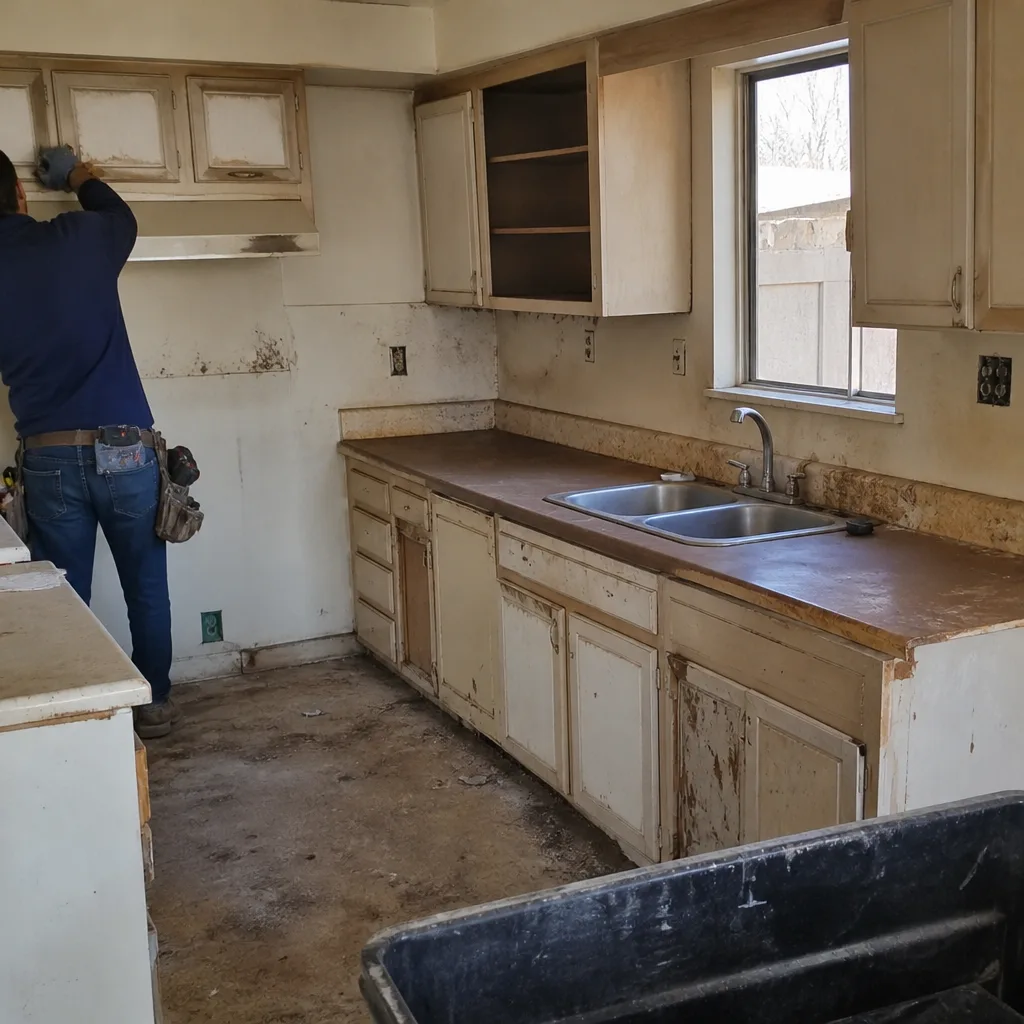 Before
 After
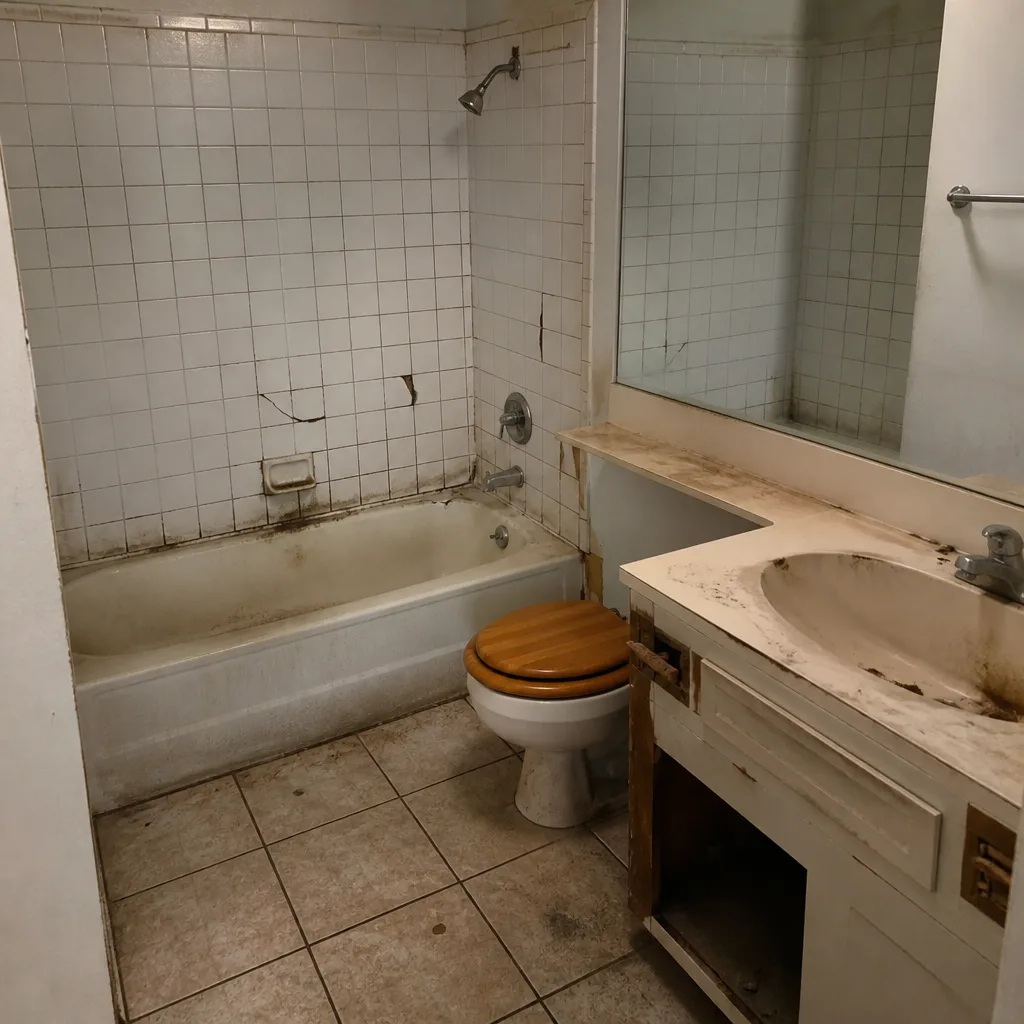 Before
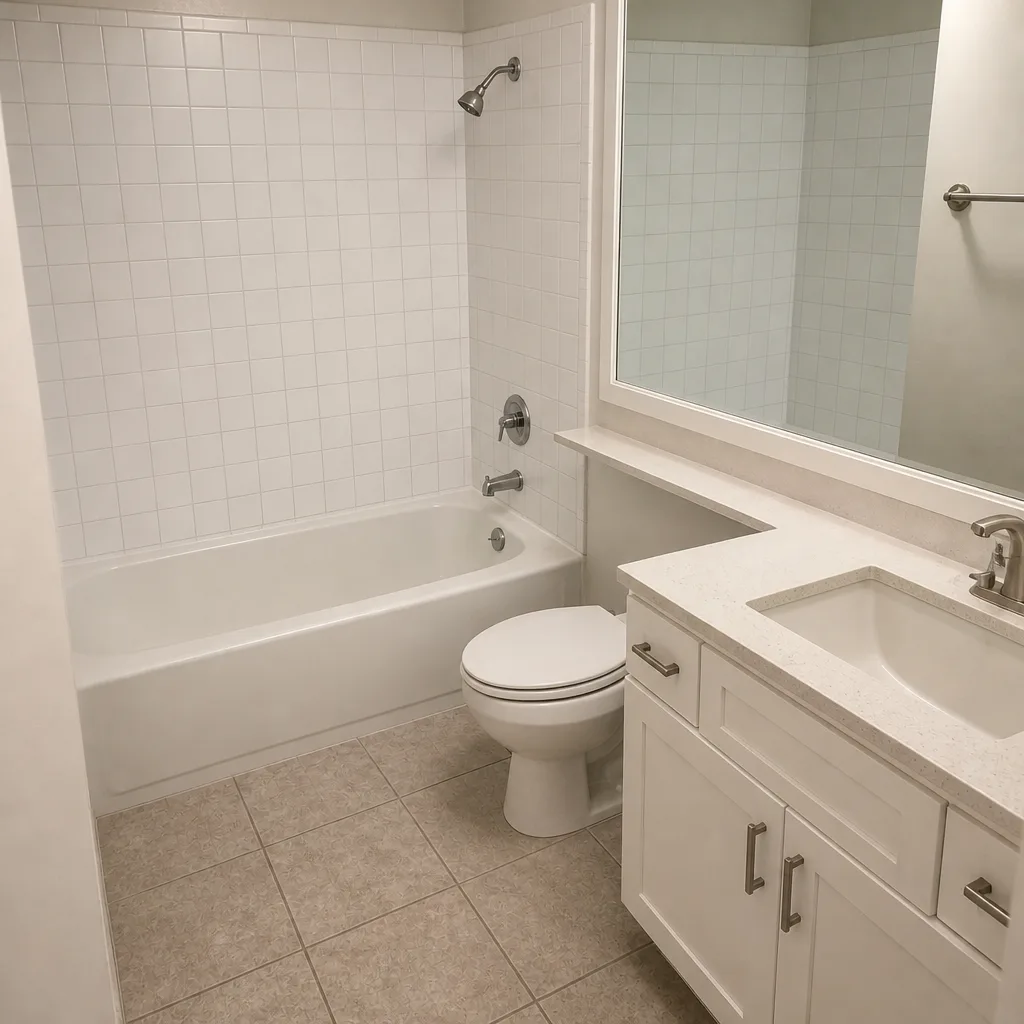 After
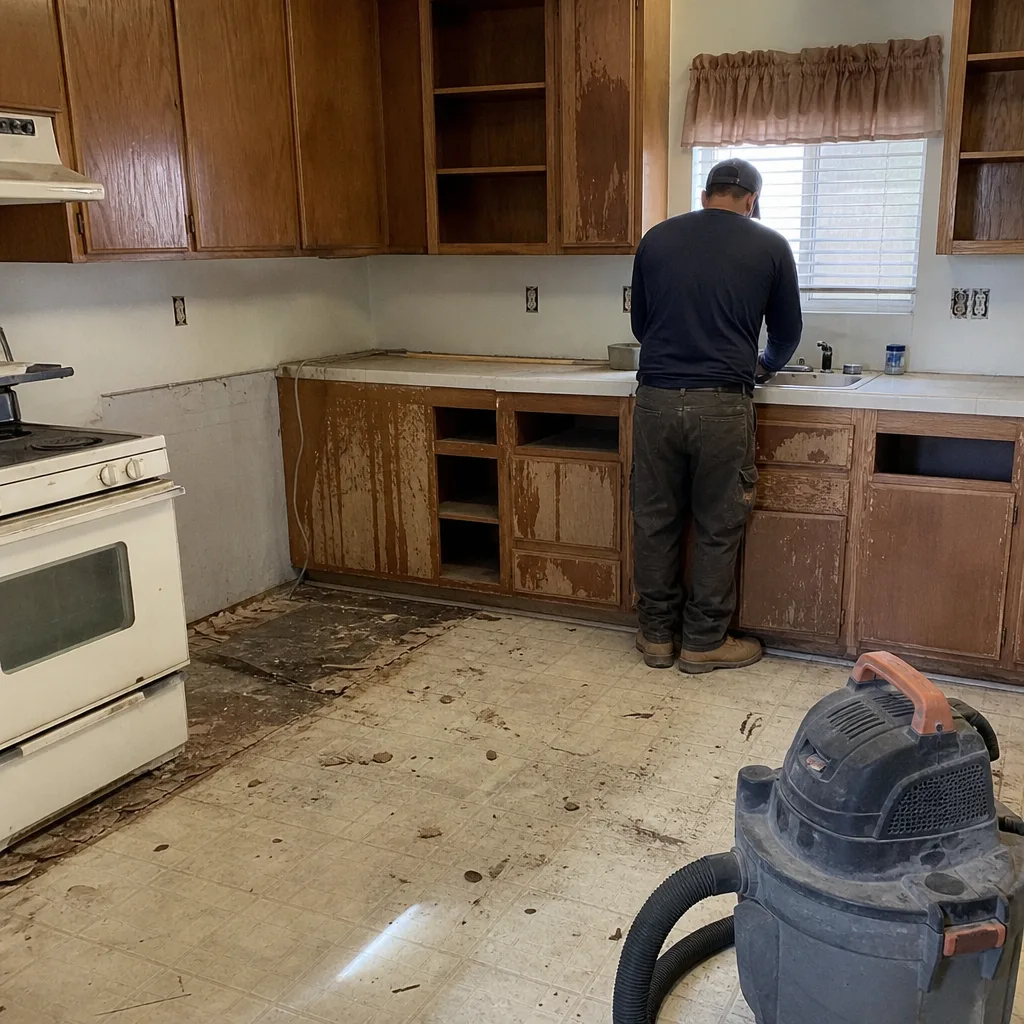 Before
 After
When to Call a Professional
Call for a professional evaluation when any of these are present: horizontal or displaced cracking in a block or masonry wall; a membrane seam that is lifting or fish-mouthing; an active water stain on a ceiling, especially near an electrical fixture; a fence post that has loosened at the base with a cracked concrete collar; a driveway panel that has lifted and become a trip hazard; or a bathroom shower with movement underfoot and dark grout. Any of these can point to a cause that a coating or a patch won’t fix.
Construction Henderson offers free estimates in Henderson. A licensed professional can read the sign in context and tell you what the pattern means. From the roofline to the driveway, our seven service categories cover what a diagnosis tends to uncover. Call (833) 733-3914 to schedule your free estimate.
Frequently Asked Questions
A stair-step crack follows the mortar joints in a diagonal, staircase pattern across block or brick. A horizontal crack runs parallel to the ground, usually near the top of a wall or at a load point. The stair-step pattern usually points to foundation movement; the horizontal pattern usually points to a structural load concern. Both are worth a professional evaluation. Call (833) 733-3914 for a free estimate and an in-person read.
Efflorescence is salt pushed to the surface by water moving through the wall, so the appearance means moisture has been moving through that section. Common causes locally include water at the wall base, a roof or window detail that is letting water into the assembly, and slope that directs water toward the wall instead of away. Cleaning without fixing the source will not keep it from returning. Call (833) 733-3914 for a free estimate to trace the source.
A lifted driveway corner is usually a soil and base problem, not a slab problem. The corner rises because the base under that portion of the slab has moved, often from water and soil behavior in Henderson’s caliche-heavy ground. Patching the corner fixes the surface; correcting the base and drainage is the fix that lasts. Call (833) 733-3914 for a free estimate on the right repair.
A sound fence post should not be out of plumb by more than a finger’s width when you sight down the line. Any lean that has developed gradually points to a loosening footing, especially when the concrete collar is cracked or pulled above grade. If the post wiggles under hand pressure, the footing is compromised and the next wind event is a real risk. Call (833) 733-3914 for a free estimate on the fence repair.
If the shower pan moves underfoot, tile sounds hollow, or grout stays dark in one area, the waterproofing has failed and a repair over the wet substrate will not hold. The correct sequence is to open the assembly, correct the waterproofing, then select fixture brands like Grohe or Sterling and re-tile. The fixture brand comes after the moisture fix. Call (833) 733-3914 for a free estimate on the scope.
Fish-mouthing is a lifting of the TPO or membrane seam where it is no longer bonded to the substrate, and it often looks like a curled or raised edge along the seam. It matters because the seam is the water barrier, and once water gets under the membrane it can travel laterally and show up inside the home well away from the visible defect. Call (833) 733-3914 for a free estimate to have a roofer inspect it.
The Bottom Line
A Henderson home’s warning signs are readable if you know the patterns. Stair-step cracking in a block wall points to foundation movement; a horizontal crack in the same location points to structural load. Ridge tile movement and fish-mouthed membrane seams are the early roof warning signals, not the early signs of a leak. A lifted driveway corner is usually a base and drainage question, not a slab question. Fence post lean with a cracked collar is a warning before a wind failure. Ceiling stains and efflorescence are the interior and exterior traces of a water path you have not yet found. Document the sign, note whether it is growing, and match it to a trade before you spend money on a cosmetic fix. When the pattern points to structure, water, or the roof, get a professional evaluation. Keep this guide handy and treat the home as a system.
Written by the team at Construction Henderson.