
Last updated November 17, 2026
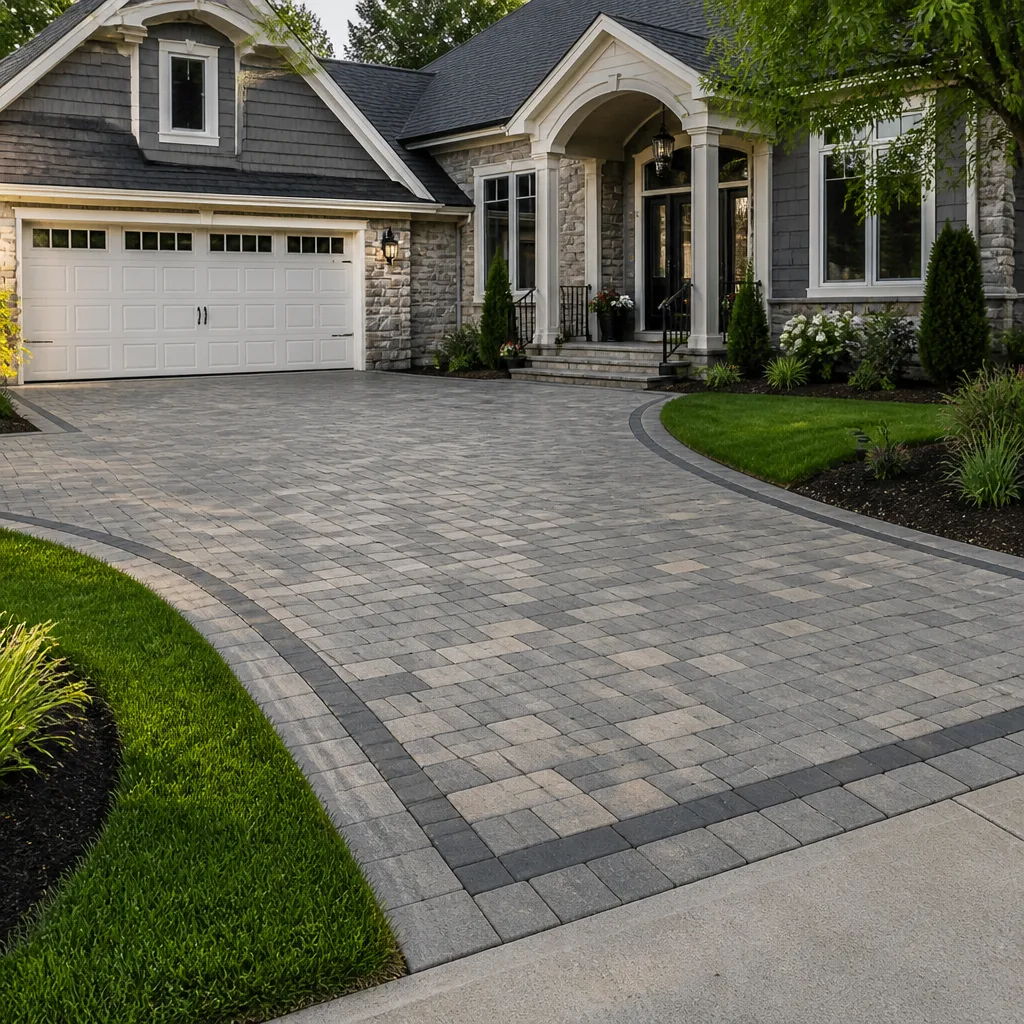 Driveway & pavers
 Kitchen remodeling
 Bathroom remodeling
 Home additions & ADU
 Roofing
 Windows & doors
 Fence
Free written scope consultation - allowances, timeline, and change-order rules on paper before a single trade is scheduled
Driveway & Pavers Troubleshooting in Henderson: Common Problems and How to Fix Them
If your pavers are rocking underfoot within a few years of installation, there is a strong chance the base was never built correctly in the first place. In Henderson, that usually means one thing: caliche. This valley’s caliche layer is a naturally cemented calcium carbonate hardpan that can sit inches below the surface and behave like concrete. When a crew scrapes the surface, drops base gravel on top of intact caliche, and compacts, the pavers feel solid on day one. Then the ground moves, water pools where it can’t drain, and the whole assembly starts to shift. A sand top-off will never fix that.
This guide helps you tell the difference between surface problems you can manage and base failures that need reconstruction. It covers how the Henderson climate, soil, and water interact with pavers, what efflorescence patterns actually mean, why edge restraints pull out of caliche, and how polymeric sand fails in different ways. You will also learn cost thresholds that tell you when a partial relay makes sense and when you are throwing money at a doomed slab.
Quick Answer
Most paver problems in Henderson come down to three root causes: caliche that was never removed before the base went in, the wrong jointing sand for a desert climate, and edge restraint that cannot hold in hard soil or against decomposed granite borders. Sinking and shifting almost always point to base failure rather than settling. Fixing it properly means removing the failed base, rebuilding with compacted aggregate, and reinstating an edge restraint that anchors into something solid.
Styles & brands we work with
- Kitchen remodeling
- Bathroom remodeling
- Home additions & ADU
- Roofing
- Windows & doors
- Driveway & pavers
- Fence
Table of Contents
- The Three-Step Tap Test: Diagnose Before You Spend
- Caliche and the Base: Why Sinking Pavers Usually Mean a Redo
- Efflorescence in Henderson: Cosmetic Bloom vs. Moisture Trouble
- Edge Creep and Decomposed Granite Borders
- Polymeric Sand Failures: Washout, Cracking, and Ants
- Partial Relay vs. Full Base Reconstruction
- Heat, Monsoon Runoff, and Seasonal Movement
- What to Specify Before Work Starts
The Three-Step Tap Test: Diagnose Before You Spend
Before you call anyone, you can narrow down what is wrong with a set of taps and a visual inspection. This saves you from paying for a diagnosis you can do yourself, and it gives any contractor a head start on the repair.
- The tap test. Walk the problem area and tap each paver firmly with a rubber mallet or the handle of a screwdriver. A solid “thud” means the paver is bedded properly. A hollow “thunk” means there is a void under it. If hollow pavers sit alone, the problem is likely local. If they cluster in a line or across a wide area, expect a base issue.
- The rock test. Step squarely onto the corner of each suspect paver. If it rocks without the neighbor moving, the sand bedding under it has washed or settled. If the neighbor lifts with it, the base beneath both has failed and the pavers are moving as a group.
- The water test. Pour a cup of water onto the joints and watch where it goes. Water that disappears quickly means joints are draining well. Water that pools on the surface or runs toward the house means the slope is wrong or the bedding is saturated. Poor drainage is often the upstream cause of the whole problem.
Run these tests on three areas of the driveway: near the garage, mid-run, and at the apron. Compare results. If only the apron rocks, the transition to the street may have settled. If the whole run rocks, you have a base problem. If the pavers near the garage are the only ones hollow, the high point of the slab may have lost support. Record your findings, because a contractor will ask exactly these questions.
Caliche and the Base: Why Sinking Pavers Usually Mean a Redo
Caliche is a cemented layer that forms naturally across much of the Henderson valley, especially on the higher ground toward Green Valley and Anthem. It looks like pale, chalky rock and can be anywhere from a few inches to several feet thick. When it is intact, it can act as a stable layer. When a crew breaks through some of it but not all, or leaves pockets in place and fills around them with aggregate, the result is unstable.
What does a proper base look like? For a residential driveway in this area, a Class II aggregate base, compacted in lifts of four to six inches at a time, is the standard approach. Compaction in lifts is critical. You cannot achieve the same density by dumping two feet of aggregate and compacting once. The other critical step is confining the base so it cannot migrate sideways when water moves through.
Signs the base has failed and a redo is required:
- Paver dippers or trip hazards that move as a group, not individually.
- Visible sunken channels after rain, especially where water runs toward the street.
- Sand pumping up between joints when the pavers flex.
- Recurring failure of the same area within two to three seasons.
- Hollow tap results in a band wider than a single row of pavers.
If you are seeing any two of these, adding sand to the joints will not solve the problem. The base must come up and go back down. This is also the moment to ask a contractor whether the new base needs an underdrain or a re-graded slope to direct water away from the house.
Henderson soil is not the only variable. Water from higher ground, from neighbor driveways, or from irrigation overspray can undermine a base even when the base was done correctly. A repair plan that removes caliche and reconstructs the base but does not address where water goes will fail again. Ask about drainage before signing anything. The team at driveway & pavers plans repairs with the drainage path in mind from the start.
Efflorescence in Henderson: Cosmetic Bloom vs. Moisture Trouble
Efflorescence is the white, powdery haze you see on paver faces after water evaporates and leaves dissolved salts behind. In Henderson it is common because our water is hard and our irrigation often oversprays onto pavers, especially where sprinkler heads sit close to the driveway apron. The question is whether the bloom is a cosmetic nuisance or a sign of moisture intruding from below.
How to tell them apart:
- Where does it appear? Whitish bloom that shows up after rain or irrigation and fades in dry weeks is usually cosmetic. Bloom that shows up in a defined area every week without any water on the surface points to moisture coming from underneath.
- Does it recur in the same spot? Cosmetic bloom is random. Persistent bloom in one corner or along one line means that water is being drawn upward through the substrate.
- Is there sand pumping or a hollow sound? Cosmetic efflorescence shows up on solid pavers. Structural efflorescence shows up on moving pavers, often accompanied by sand pushing up in the joints.
Cosmetic bloom usually responds to a proper paver cleaner and adjusting irrigation so it doesn’t hit the driveway. Structural bloom means you have a moisture source under the surface and a base failure underneath that layer of salt. A sealer can help slow recurrence, but a sealer over trapped moisture makes the problem worse. Fix the water path first.
Note that efflorescence on new pavers is not the same as on older ones. Fresh pavers can release salts simply from curing. Older ones releasing salts mean something changed in the moisture environment.
Edge Creep and Decomposed Granite Borders
Edge creep is what happens when the perimeter of your paver installation starts spreading outward. On a Henderson driveway, this often shows up where pavers meet a landscape bed of decomposed granite, river rock, or bare soil. Over a season or two, the outer row creeps six inches to a foot, joints open up, and eventually sand pours out of the side.
The cause is almost always edge restraint. Plastic edge restraint that is spiked into caliche will not hold. Caliche is too hard for a standard spike to bury to depth, so the spike stops short, wobbles, and backs out after a few freeze-thaw or wet-dry cycles. The paver row then creeps. If the edge is instead bedded in a concrete curb, or anchored with steel spikes into aggregate base that was installed correctly, creep stops.
Decomposed granite borders make this worse in two ways. First, DG shifts when wet and pulls the restraint with it. Second, DG retains water along the paver edge longer than open soil would, so the edge zone stays damp and the restraint loosens faster. If you want a decorative DG border that survives, the edge restraint must be set in concrete or anchored deep into properly compacted base, and the DG should be kept at least an inch below the top of the pavers so it does not wash into the joints.
Causes of edge creep we commonly see in Henderson:
- Plastic edge restraints spiked directly into hard caliche.
- No edge restraint at all, with pavers butted against DG or soil.
- Restraint set on disturbed fill rather than compacted base.
- Concrete curb poured too thin to resist expansion.
- Missing restraint at transitions to driveways, walkways, or the street apron.
Fixing creep almost always requires pulling the outer row, rebuilding the edge zone with compacted aggregate, and reinstating a restraint that can hold. Repointing the joints alone will not solve it.
Polymeric Sand Failures: Washout, Cracking, and Ants
Polymeric sand is the joint filler that locks pavers together. When it fails, it fails in one of three distinct ways, and each failure mode needs a different fix. Treating all three as “sand needs topping up” wastes money and delays the real repair.
Washout. The joint sand washes away because water runs across the pavers faster than it drains through the joints, usually during monsoon downpours or from irrigation overspray. It looks like missing joints, sandy runoff at the apron, and open gaps between pavers. The fix is to re-sand with the correct product, then address the source of the water. If the slope sends water off the driveway, edge restraints and joint sand will fail again every season.
Cracking. The polymeric sand cures hard but then fractures into short segments or hairline splits. This usually means the sand was set too wet, applied too thick, or exposed to moisture before it set. Cracking is common in Henderson where afternoon temperatures swing widely. Repairing cracking means cutting the failed joints out, cleaning, drying, and re-sanding with a correct pour and set schedule.
Ant infestation. Certain ants, notably fire ants, nest in the granular layer under paver joints. You will see small mounds at joints and hollow-sounding pavers. If you simply re-sand, the ants tunnel through the new sand in a week. Treatment has to come before re-sanding, and the repair sand has to be applied after the colony is cleared.
Products matter. A polymeric sand designed for hot, dry climates and frequent irrigation will perform better than a general-purpose product. Ask any contractor which brand they specify and why. In our experience, the failure modes above account for most of the joint sand callbacks we see.
Partial Relay vs. Full Base Reconstruction
Once you know the base has failed, the next question is how much of the install has to come up. Partial relay is sometimes viable. Full base reconstruction is sometimes the only durable fix. Here is how to think about the decision.
Partial relay is usually viable when:
- The failure is confined to one area, typically the driveway apron, a low point, or the transition to a walkway.
- The adjacent pavers pass the tap test across a wide margin.
- The visible base under the removed pavers is compacted aggregate, not intact caliche with gravel on top.
- Water can be redirected without disturbing the rest of the slab.
Full base reconstruction is usually required when:
- The hollow area spans more than a few rows in multiple directions.
- You can see intact caliche beneath the failed base.
- The pavers show lippage (front-edge height differences) across the driveway, not just at one edge.
- The edge restraint has failed along most of the perimeter.
- The same area has already been re-sanded or spot-repaired once and failed again.
The cost gap is significant. A partial relay touches a slice of the driveway. A full rebuild removes pavers, excavates the failed base, breaks through or removes caliche where needed, rebuilds in compacted lifts, and reinstates the pavers and edge. If you have already paid for a spot repair that failed within two seasons, and the tap test now shows the failure spreading, the honest move is a full rebuild rather than another partial. The threshold is not just dollar cost. It is repair count. One failed spot repair is a lesson. Two failed spot repairs are a signal.
Heat, Monsoon Runoff, and Seasonal Movement
Henderson’s climate moves pavers more than most homeowners expect. Summer heat expands pavers and joint sand, and the cool season contracts them back. This cycle, on its own, is manageable when the base is right. It becomes damaging when combined with water.
Monsoon season, usually July through September, delivers short high-intensity storms. The runoff path across a paver driveway can carry enough water to displace joint sand, undercut edge restraints, and carve channels in a bad base. After a storm like that, the visible damage (open joints, sand piles at the apron, a sunken low point) is a symptom of the interaction between water and base, not a random event.
The dry months have their own effect. When the ground dries and contracts around the base, fine particles can sift into voids under the pavers. Over several seasons, that migration deepens the voids and makes the rocking worse. Keeping joint sand topped up and functional actually helps the base survive the dry season, because full joints limit how much water enters the bedding layer.
Also worth noting for Henderson: irrigation is a common culprit. A sprinkler head that oversprays onto the driveway puts water on pavers that would otherwise dry out. Moving the head or adjusting the arc can reduce recurring efflorescence, slow edge creep, and extend joint sand life, all for the cost of a small plumbing tweak.
What to Specify Before Work Starts
If you have decided on a repair, the exact materials and steps specified before work starts determine whether the repair lasts. Here is the checklist we walk through with homeowners.
- Base removal. Confirm that failed base and any intact caliche under the affected area will be removed, not just filled over.
- Base specification. Ask for a named aggregate type and grading, and for confirmation that compaction happens in lifts.
- Drainage plan. Ask where stormwater and irrigation runoff will go after the repair. If the slope sends water onto the pavers, fix that first.
- Edge restraint. Specify restraint that anchors into compacted base or concrete, particularly along decomposed granite borders.
- Joint sand. Ask for a polymeric product suited to a hard-water, hot-climate setting, and ask how soon the surface can be walked on.
- Paver selection. If you are replacing pavers, ask about color fastness, thickness, and manufacturer warranty. Henderson’s UV load punishes weak pigments.
- Efflorescence control. Ask whether the plan includes pre-sealing or post-install cleaning, and how recurrence will be handled.
Hardscape work ties directly into the rest of your exterior. Fence posts set in caliche need the same base care. Walkways and patios need the same drainage thinking. If you are combing through multiple exterior projects, doing them under a coordinated scope reduces the odds that one trade undoes another’s work. You can read more on how fence installation deals with this soil, and if you are considering adding a casita or expanded footprint that changes your driveway layout, see how home additions & ADU planning works in Henderson.
Material selection matters, too. The names we consistently specify for pavers are Belgard, Unilock, Techo-Bloc, and Cambridge Paver because they hold color and dimensional tolerance in a hot, sunny climate. We work with more than 50 vetted manufacturer relationships across the trades, so a single scope can cover pavers, fencing, and roofing material without bouncing between vendors. That consistency shows up when you need the driveway and the roof to age together.
Common Mistakes to Avoid
- Top-dressing sand and calling it a repair. New sand over a moving base hides the failure for a few weeks. It does not fix the caliche underneath.
- Trusting “settling” language after a first-year failure. Pavers that move in the first three years were not set on a proper base. Settling describes slow, minor, distributed movement, not a whole area heaving.
- Spiking edge restraint into caliche. The spike will stop short and back out. Insist on concrete curb or deep anchoring into compacted base, especially along decomposed granite borders.
- Ignoring irrigation overspray. A single misaimed sprinkler head can cause recurring efflorescence and joint sand failure without any storm. Check the arcs before signing a repair.
- Re-sanding over an ant colony. New polymeric sand over active ants becomes a pathway in a week. Treat the colony first.
- Sealing pavers with trapped moisture. A sealer over trapped efflorescence moisture worsens the bloom. Diagnose first, seal second.
- Choosing a cheap paver for a Henderson driveway. Low-cost pavers often use pigments that fade quickly under our sun, and thinner cross-sections that fail at edge transitions. Confirm brand and thickness.
- Skipping the drainage plan. A repair without a slope and drainage plan will fail again. Where does the water want to go? That answer decides the repair.
See the difference
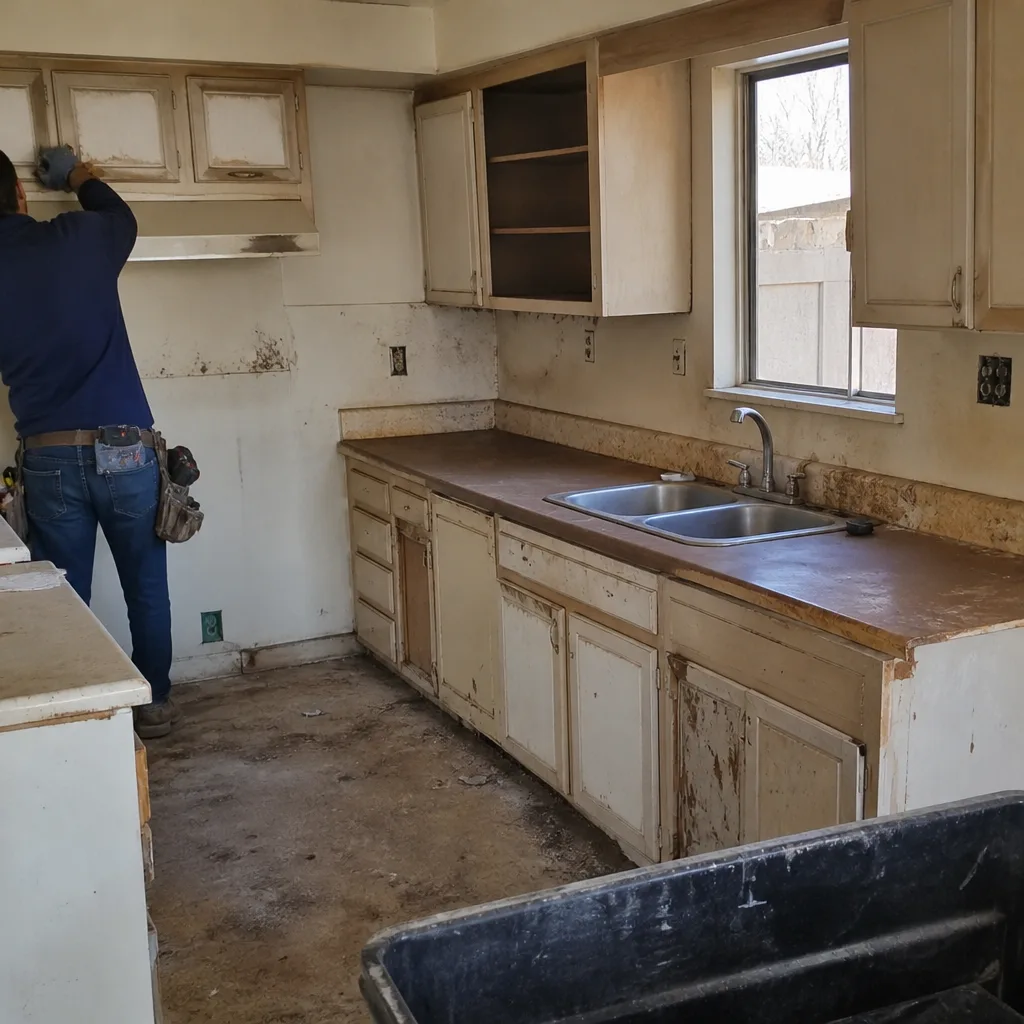 Before
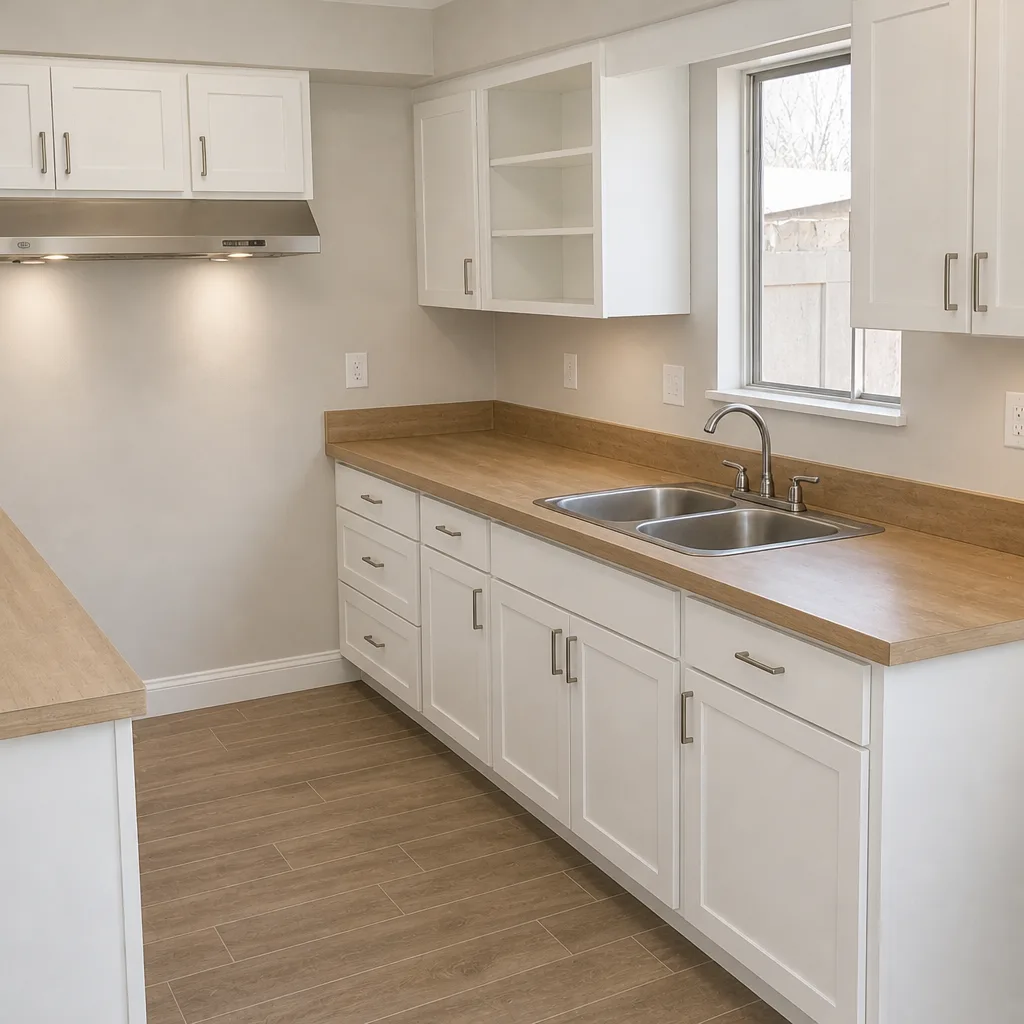 After
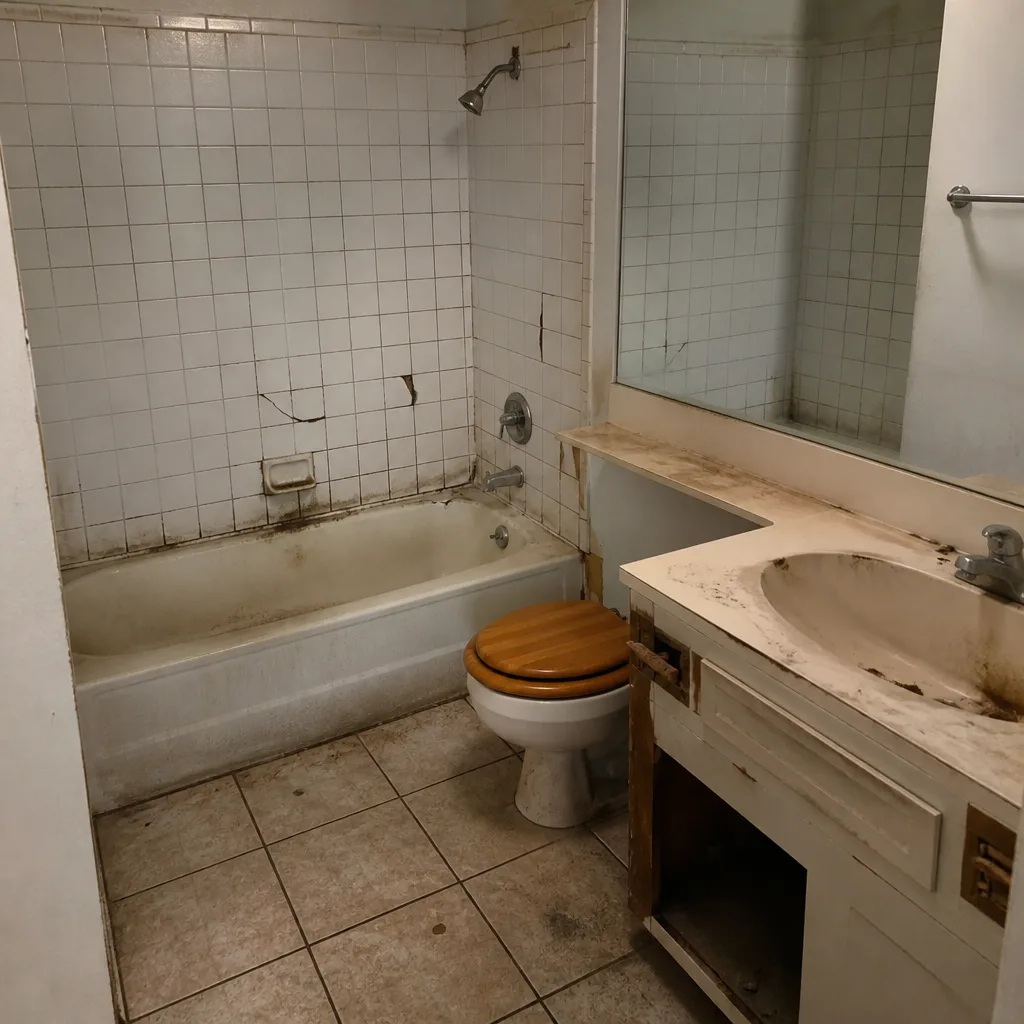 Before
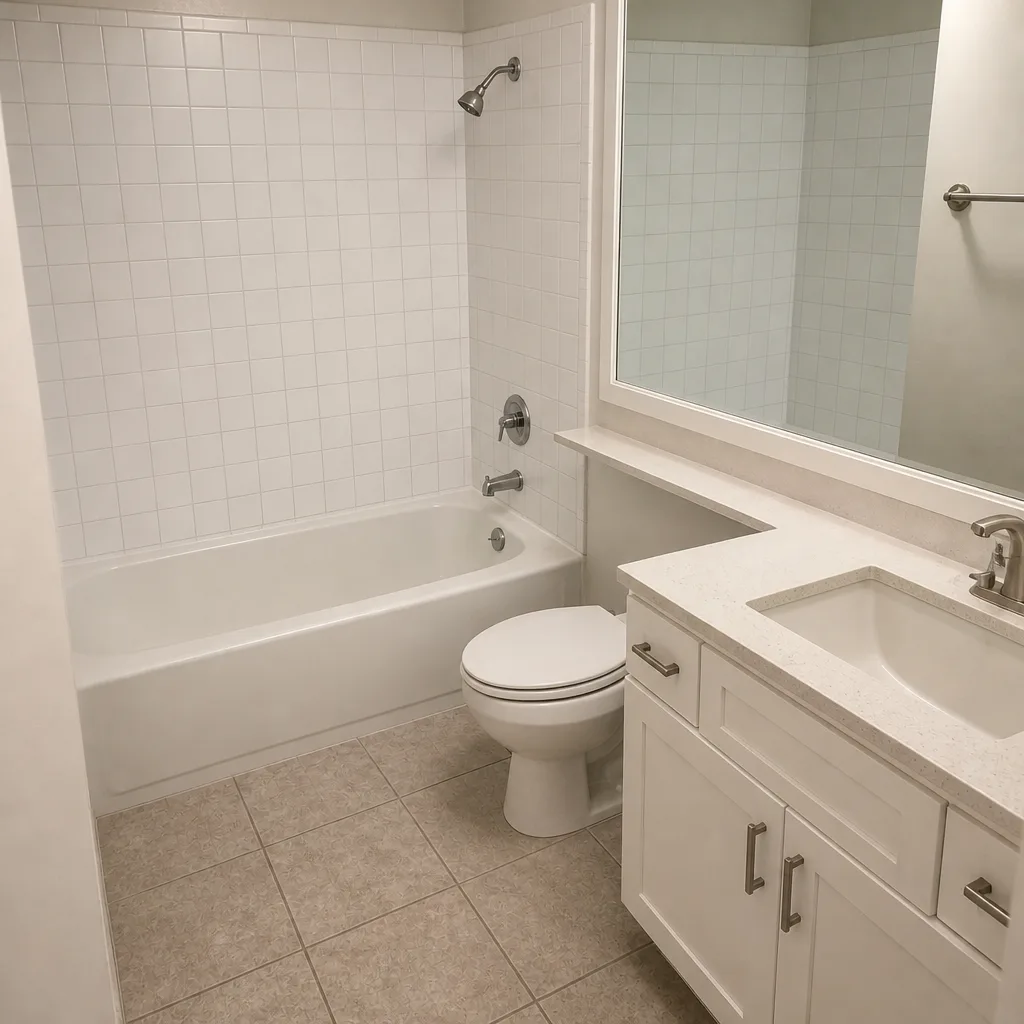 After
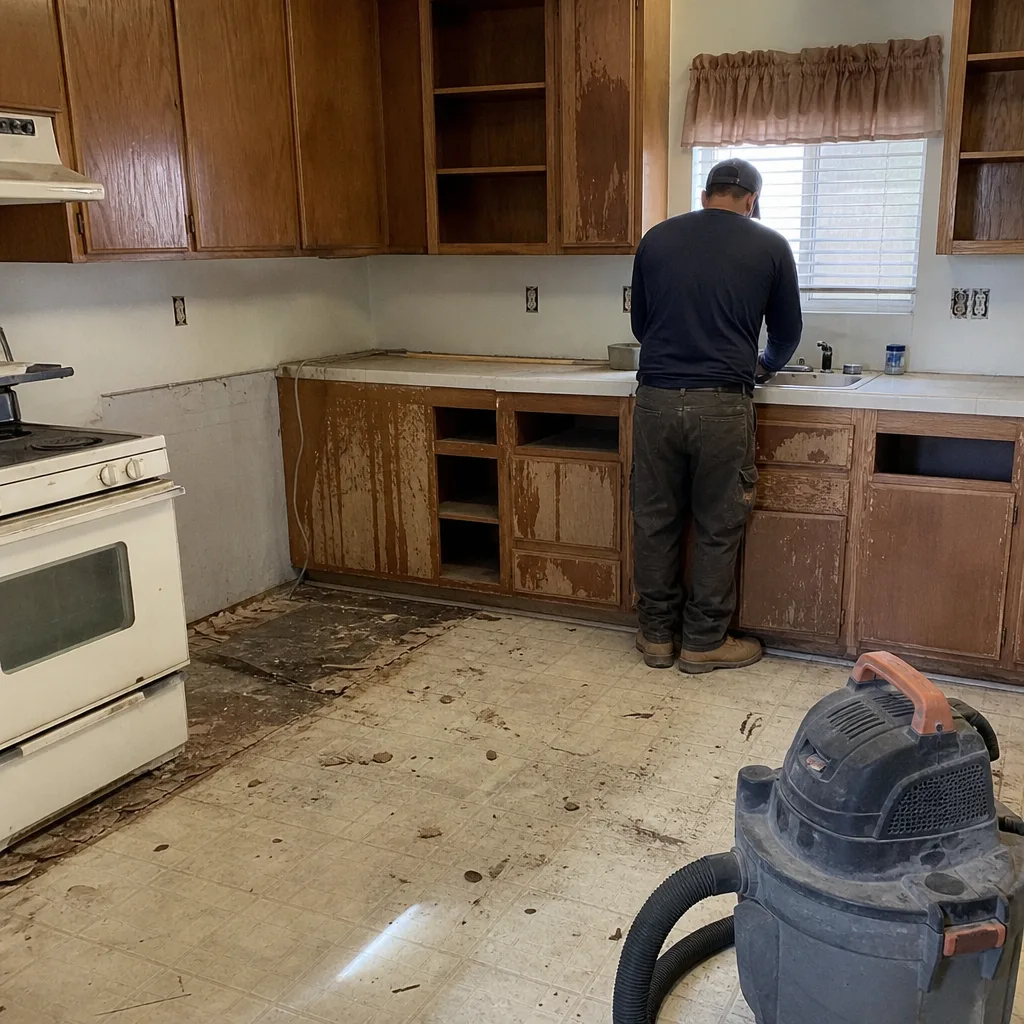 Before
 After
When to Call a Professional
Call a professional when the tap test shows hollow pavers across more than a few rows, when the same area has failed twice, when edge creep has opened joints by more than an inch, when efflorescence keeps returning despite a corrected irrigation schedule, or when the base under the pavers is intact caliche with gravel on top. Those situations require removal and reconstruction, not a surface treatment. Call also if a storm or irrigation line break has carved a channel beneath the driveway or under an edge restraint. The longer a void stays open, the larger the eventual rebuild area. Construction Henderson offers free estimates in Henderson – call (833) 733-3914. We answer 24/7. Fast dispatch from 7am to 7pm, Sunday through Friday.
Frequently Asked Questions
Paver sinking and shifting in Henderson almost always traces to caliche that was not removed before the base went in, or a base that was not compacted in lifts. Water then finds the weak spot, and the pavers begin to move as a group. Sand top-offs will not fix it; the base has to be rebuilt. Call (833) 733-3914 for a free estimate on the repair.
Paver repair pricing in Henderson depends on whether you need a partial relay or a full base reconstruction, and on the paver brand and area involved. A written line-item estimate is the only way to know for your specific driveway. Call (833) 733-3914 to schedule a free estimate so the written scope sets the price, not an over-the-phone guess.
You can top up polymeric sand if the base is solid and only the joints are low. If the pavers rock, hollow, or form a sunken line after rain, the sand will fail again within one monsoon season. Diagnose the base first with the tap test. Call (833) 733-3914 for an exact recommendation and free estimate.
Edge creep into a decomposed granite or soil border almost always means the edge restraint has lost its anchor, usually because a spike was driven into caliche and never reached compacted base. The restraint needs to be reseated into concrete or aggregate base, and the border should sit an inch below the paver top. Call (833) 733-3914 to have the edge zone rebuilt correctly.
Efflorescence that reappears in the same spot every week, especially when the pavers below are hollow or have sand pumping, is structural moisture, not cosmetic bloom. Cosmetic bloom is random and fades in dry weather. Fix the water source before sealing. Call (833) 733-3914 for a free assessment.
The price is set by the written estimate for the specified scope. If excavation reveals a larger caliche layer or deeper base failure than the walk-through showed, that is confirmed with you before extra work is done, not billed after the fact. Call (833) 733-3914 to schedule a free estimate and a clear written scope.
The Bottom Line
Most paver failures in Henderson come from three root causes: caliche left in place, the wrong joint sand for our climate, and edge restraint that cannot hold in this soil. Learn to run the tap test, and you will know before you call whether you are dealing with surface sand loss or a base rebuild. Efflorescence, edge creep, and joint sand failures each have distinct signatures, and the right repair depends on which you are looking at. If you want the repair done once and correctly, bring in a contractor who will confirm the base, specify the restraint, and plan the drainage. Construction Henderson can walk your driveway, run the diagnosis, and give you a written estimate before any work starts. Call (833) 733-3914. We answer 24/7. Fast dispatch from 7am to 7pm, Sunday through Friday. You can also see the full scope of Construction Henderson services across the exterior and interior, and read more about our work with driveway & pavers for a deeper dive into materials and install standards.
Written by the team at Construction Henderson.